




Our “solar 101” series is designed to guide prospective residential and commercial solar customers in their quest for the right solar system.
We’ll break down the decision-making process into bite-sized pieces so you can navigate the process and feel good about your choices.
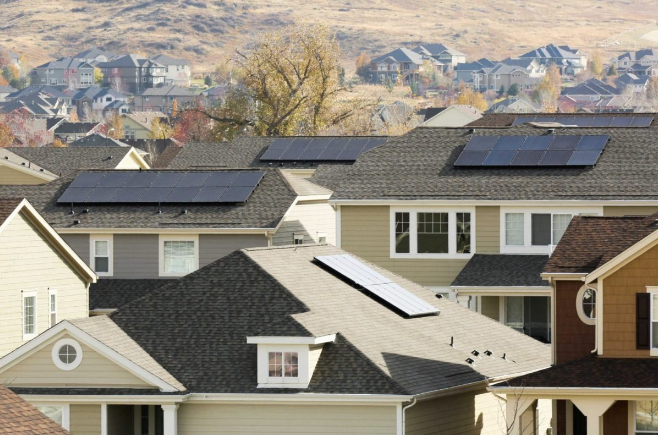
We’ll focus on the most common type of residential or commercial installation: a system attached to a roof.
And to get started, we will look at how to evaluate the age and condition of your structure’s roof. Is it old? Is it new? Wait… didn’t we just replace the roof not too long ago?
If your roof is less than five years old (or better yet, if it is brand new) then this is a perfect time to install solar. Solar installed on a newer roof is low maintenance, and will age gracefully over the years!
But what if your roof is old or leaking, and will soon need to be replaced? That’s also an ideal opportunity, because it allows your roofers to coordinate with your solar developer to install the best system overall.
But what if your roof is somewhere in between?
Customers often have a problem adding solar panels to roofs that are middle-aged. A typical roof has a 25-year life expectancy, so roofs in the range of 8 to 20 years present a dilemma of wasting many costly “roof years.”
For instance, a 250,000-square-foot white thermoplastic (TPO) roof on a commercial structure might cost $5/sq. ft.—on the order of $1.25 million–to replace. That amounts to roughly $50,000 per roof year. So, if you “give up” five years, that’s $250,000.
And while a homeowner’s dollar amounts are much lower, the dilemma is just as real.
When unsure of what to do because your roof is in that pesky middle-aged range, use this approach to quickly determine the dollar value of the roof’s age:
Expected Roof Lifetime – Age of the Roof = Leftover Roof Life
Divide Leftover Roof Life by Expected Roof Lifetime. (This gives the percentage of the roof’s remaining value)
Multiply that percentage by the cost of the new roof
The dollar amount that results offers a way of figuring out what you may be willing to pay for clean electricity from solar. If that number hurts as the check is written, maybe wait a few years. But not always! Especially not if you’re someone who cares about the environment. In fact, you might purposely decide to spend a little extra for the opportunity to reduce your environmental impact.
And, sometimes, depending on solar incentives and bank financing rates, it actually makes economic sense to replace a roof early. So use the formula as a guide, but weigh it against your other goals and factors.
As a start, get quotes from both roofing and solar contractors. When you compare the total cost of both investments to the long-term electricity savings you stand to realize from the solar system, you can get a good idea of your projected electricity savings.
Obviously, the combined payback period for a new roof and a new solar system is much longer than a solar system’s payback on its own. However, a solar power system pays for itself in a way that asphalt shingles and TPO simply can’t.
Seen from a different angle, buying a roof with a solar system is almost the same as getting a free roof!