





Regional grid integration may advance faster through a flexible, backbone transmission model.
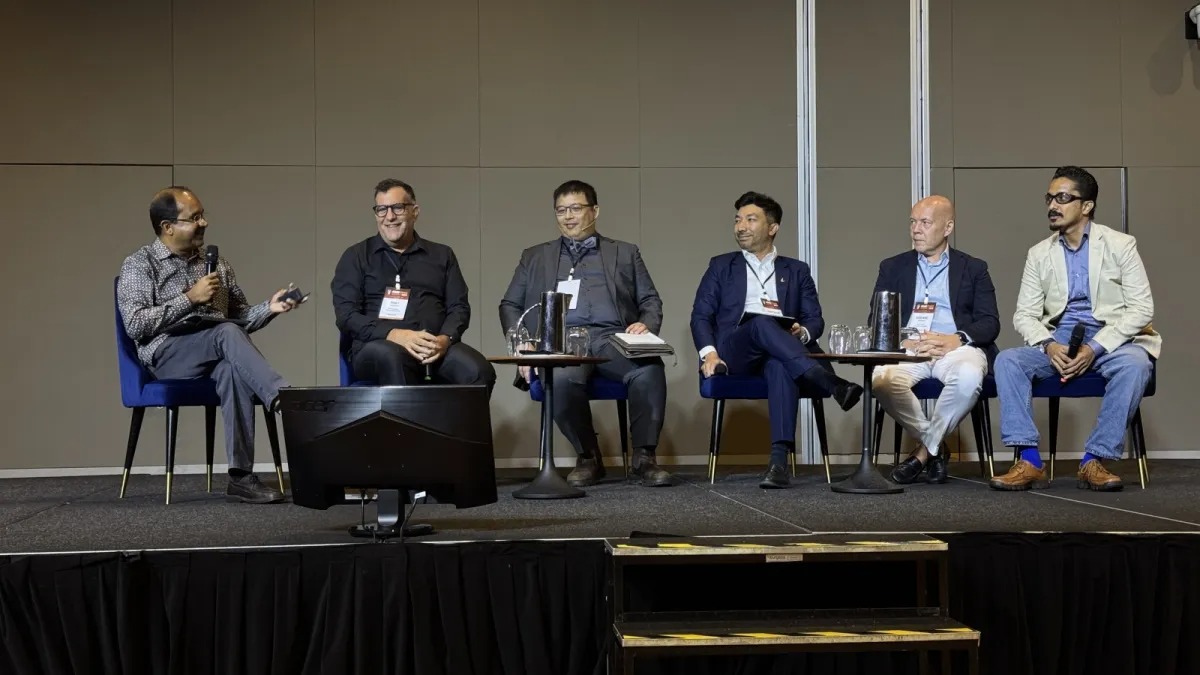
Energy leaders have debated the long-delayed ASEAN Power Grid (APG), highlighting both the potential and the persistent obstacles of regional power integration.
During the Asian Power Summit 2025 in Singapore, Tony Segadelli, chief engineer and managing director of Owl Energy Consultants, noted that the vision dates back decades.
“It was supposed to be finished by 2020. It’s now 2025, and the current plan is for it to be completed by 2045,” he said.
Segadelli stressed that progress will depend on institutional alignment: “The power grid would need to have an ASEAN-wide power grid authority that promotes integration… Singapore will have to financially lead it.”
Edgare Kerkwijk, board member of the Asia Wind Energy Association, meanwhile, said, “The world is going to double its energy consumption… so who’s going to sell energy to their neighbour if they need it themselves?”
“In the EU, it works because they have a lot more regulation in common. In Asia, there’s so much diversity… it’s going to be very tough to make a regional power grid,” he added.
Imran Chowdhury, Deputy Director (PIM) of Ibvogt APAC, pointed to South Asia as a model. Bangladesh started importing power from India in 2013, it began small—200 megawatts—because there was lack of trust.
This later on gained support from the government, which helped increase the scale.
Chowdhury suggested forming “an Asian Power Grid Council” to improve coordination, similar to how regional councils aided South Asia’s energy trade.
Leader Energy director of Business Development Tawfique Roseli took a balanced view, noting the success with the LTMS project—hydropower wheeled from Lao through Thailand and Malaysia to Singapore.
But the challenge is the energy trilemma: supply-demand and regulatory imbalance. He added that technical instability from renewables must be addressed, saying, “Battery technology has to be put into the picture.”
Quantum Power Asia Pte Ltd CTO Andre Susanto proposed a new approach by looking at the APG not as a fully integrated grid, but as a backbone transmission system.
“Countries that want it can tap in and buy…. It’s an IPP business model,” he noted.
Despite the differences, Segadelli concluded that gradual progress is likely. “It’s going to be an awful lot of bilaterals, and by the end, it’s going to have sewn a beautiful quilt,” he said.