





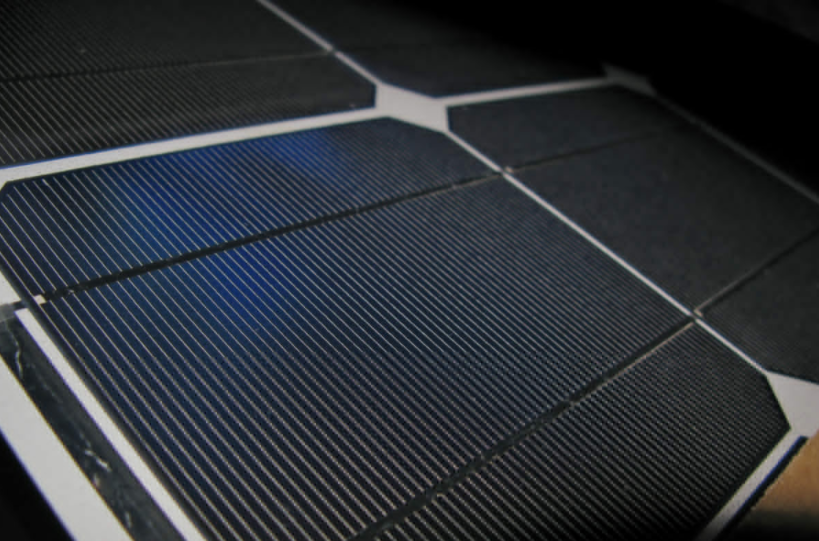
A research team from Germany’s Fraunhofer Institute for Solar Energy Systems ISE are developing ways to integrate stress and temperature sensors into crystalline solar cell wafers, in order to achieve direct and continuous measurement in conventional PV module setups.
The scientists explained that the tested sensors cover a very minimal part of the cell, and that their interaction with the module and the cell itself is quite limited. The sensors can be produced through a regular solar cell manufacturing process, they claimed, and can be applied to both the front and back sides of the cells.
“Also, existing solar cell production lines could be modified for the sensor implementation,” they wrote in Silicon solar cell–integrated stress and temperature sensors for photovoltaic modules, published in Progress in Photovoltaics.
The research team said that the stress sensor is piezoresistive, which means that it is able to respond to externally induced mechanical stress through changes in its electrical resistance. The device was applied to float zone solar cell wafers made of p‐type monocrystalline silicon. “The stress sensor is realized as a rectangular piezoresistive resistor using high local n‐doping by ion implantation and subsequent silver metallization,” the researchers said.
The sensor was laminated using a conventional PV module setup, with a 14.7×10.5‐cm2 and 1‐mm thin glass, ethyl vinyl acetate (EVA) film, and a Tedlar Polyester Tedlar (TPT) backsheet.
The process to embed the temperature sensor followed the same proceedings for the metallization that were adopted for the stress sensor. The researchers defined the process as common practice for the contact formation of high‐efficiency solar cells.
The integration of the sensors was tested with six different designs. “All designs resolve the stress in the test specimens and have sensitivities in the range between −45 and −65%/grade point average (GPA),” the scientists stated. “The module integration of this design shows that the sensors are capable of measuring the stress in laminated solar cells.”
The laminated sensors showed good stability in 145 temperature cycles from −35°C to +85°C, the research team said. They added that the devices are only being used for R&D purposes, and that the path to commercialization will require further research.