





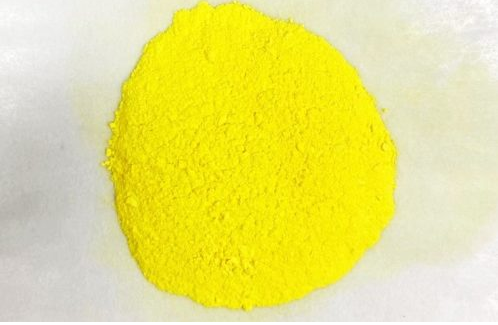
A compound used widely in candles offers promise for a much more modern energy challenge — storing massive amounts of energy to be fed into the electric grid as the need arises.
Scientists at the U.S. Department of Energy’s Pacific Northwest National Laboratory have shown that low-cost organic compounds hold promise for storing grid energy. Common fluorenone, a bright yellow powder, was at first a reluctant participant, but with enough chemical persuasion has proven to be a potent partner for energy storage in flow battery systems — large systems that store energy for the grid.
Details of the research, supported by DOE’s Office of Electricity, are published in the May 21 issue of the journal Science.
“Flow battery technology is a critical part of the Department of Energy’s goal to reduce the cost of grid energy storage over the next decade,” said Imre Gyuk, director of Energy Storage at DOE’s Office of Electricity. “Progress has been rapid, and the cost has come down significantly, but further research is needed to make grid-scale energy storage widely available.”
Although lithium-ion batteries are the most common type used in the industry, redox flow batteries are a growing alternative; however, most use vanadium, which is expensive, not easily available, and prone to price fluctuations. Those traits pose barriers to widespread grid-scale energy storage.
An alternative material for flow batteries is organic molecules, which are far more available, more environmentally friendly and less expensive than vanadium. But organics haven’t held up well to the demands of flow-battery technology, usually petering out faster than required. Long-term stability of the molecules is important so they maintain their ability to perform chemical reactions for many years.
In the Science paper, Wang’s team demonstrated that low-cost organic fluorenone is, surprisingly, not only a viable candidate but also a standout performer when it comes to energy storage.