




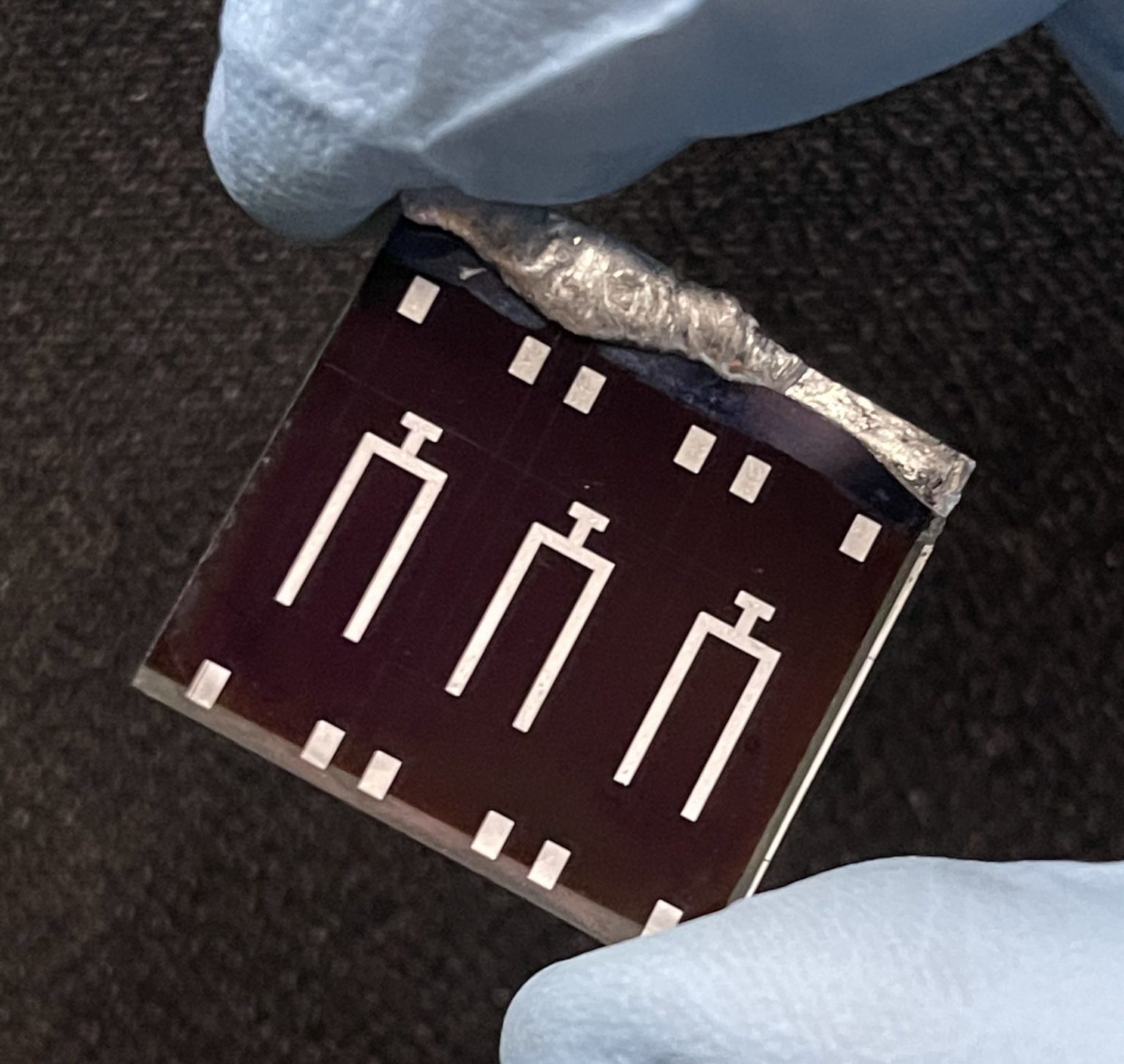
Researchers at the Korea Institute of Energy Research (KIER) have fabricated a low bandgap copper, indium, sulfur, selenium (CISSe) solar cell that can be used as a bottom cell for applications in tandem cells with a top cell based on perovskite.
“CIGS bottom cells are usually expensive as these devices are made via vacuum technology,” the research’s corresponding author, SeJin Ahn, told pv magazine. “With our new technology, we can lower the costs of tandem perovskite/CIGS solar cells.”
The scientists used a molecular ink based on N,N-dimethylformamide (DMF), which is a common water-miscible liquid solvent used in the production of acrylic fibers, plastics, pesticides, and synthetic leather, for the air annealing of the cell’s CISSe precursor films.
“We found that the air annealing temperature not only determined the degree of carbon removal (a well-known fact) but also affected the degree of crystallization in which the crystallinity of the precursor films was increased with increasing air annealing temperature, resulting in a stronger structuring of constituent atoms,” they emphasized, adding that the air-annealing temperature was also found to considerably affect the film growth kinetics during selenization.
Furthermore, they ascertained that the CISSe films have the same characteristics of copper-rich films, which are commonly used in thin-film cells due to their superior electronic properties.
The best solar cells developed by the Korean group were processed at an optimized air annealing temperature of 230 degrees Celsius. The champion device achieved a power conversion efficiency of 14.4%, an open-circuit voltage of 0.5636 V, a short-circuit current of 37.12 mA cm2, and fill factor of 68.80. The result is described by the academics as a world record for (nonhydrazine) solution-processed, low bandgap (Ga-free) CISSe solar cells. The previous best performance was 13.1%.
The solar cell was tested, together with a CISSe filtered device, in a four-tandem perovskite-CISSe cell with a semitransparent n–i–p perovskite top cell with an efficiency of 19.54%. “By summing the efficiency of the filtered CISSe device and that of the perovskite top cell, a 4T-tandem efficiency of 23.03% was obtained, which is also the highest efficiency among all-solution processed 4-T configurations,” the scientists stated. “In addition to this encouraging 4T tandem efficiency of 23.03%, it should be mentioned that there is still much room to further improve the tandem performance.”