




KHARTOUM – Sudanese farmer Mohammed Mahgoub used to spend more than $12 per day on gasoline to keep his farm in Nile River State operating, braving long queues at gas stations to fuel his irrigation pumps.
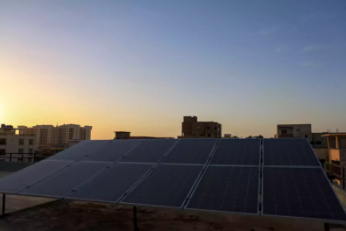
But a solar energy unit he built a year ago to power his farm has helped him save money, energy, and time. “Now I spend nothing,” he said, after the one-time installation cost.
Mahgoub’s farm is one of many small businesses and households turning to sustainable energy solutions to face Sudan’s energy shortages.
Sudan’s lack of foreign reserves has meant frequent trouble securing a stable supply of petrol, diesel, fuel oil, and cooking gas, which have resulted in frequent lines at gas stations, power cuts, and protests.
At the same time, the country’s transitional government has made energy more expensive by reducing subsidies on petrol, diesel, and electricity, part of a raft of reforms designed to attract foreign financing and pull the country out of a protracted economic crisis.
Sudan is an important emerging market for solar energy, said Rushdi Hamid, business development manager at Saruest Investment, one of six major companies investing in solar energy in Sudan.
Hamid says the country is projected to be able to produce 2.4 gigawatts of solar energy annually within the next 10 years.
“Some of that will be in the production of large power-generating plants,” he said. “But there is a lot of small domestic use that is required and a significant agricultural requirement in that sector.”
The company estimates that total investment in the solar energy sector has reached $500 million, producing nearly 500 megawatts annually. Saruest alone runs 1,200 solar energy projects in Sudan.
It and companies like it receive exemptions on their customs when importing panels, and banks are providing financing that allows farmers to pay in instalments.
A small solar energy unit usually costs around $500, and for bank manager Abdel Maged Khojaly, the unit he built on his roof has helped him save the up to 9,000 Sudanese pounds ($22) he spent on electricity every month.
“Even after the electricity supply is stabilised, people won’t give up on solar energy because it saves nearly 50 percent of the monthly electricity bill.”
(Reporting by Eltayeb Siddig; Editing by Alexandra Hudson)
Sudanese turn to solar energy amid electricity shortages
Source:Energyworld

- Advertisment -