




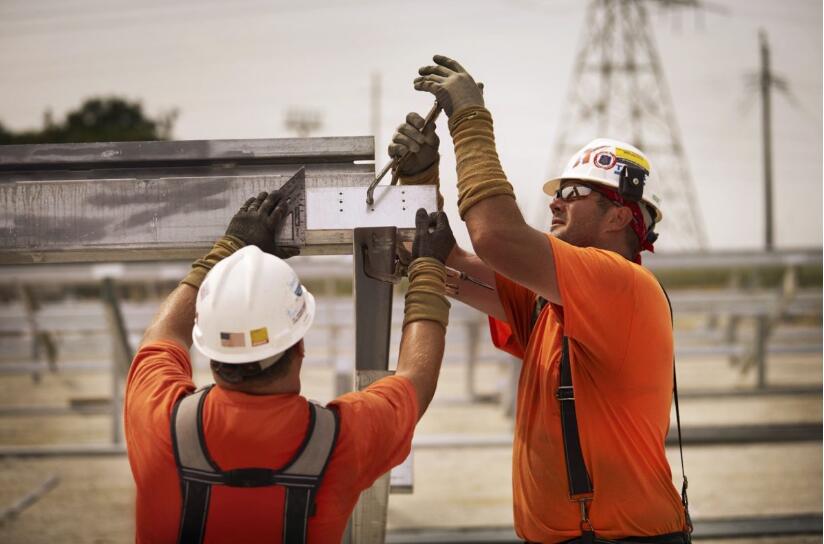
In its 2024 International Building Code, FEMA has proposed to raise the “structural risk” ranking of solar to the maximum level. This would place ground mounted solar arrays and energy storage on par with hospitals and fire stations in terms of structural building requirements for natural disaster resilience.
While increased structural resilience requirements might seem like a positive, solar industry proponents say the proposal is an “overreach” that could slow solar deployment.
“There is no extended record of irreparable damage to solar arrays from higher seismic, wind or snow loads, and there is no justification for these overly burdensome codes,” said Abigail Ross Hopper, president of the Solar Energy Industries Association (SEIA).
Solar projects are currently permitted and inspected through local building departments through International Building Code. There are already strict requirements in place for solar panels to resist high winds and snow loads, said Ross Hopper. SEIA said the proposal’s requirements are both poorly defined and technically unworkable.
Today, about 95% of solar projects are ranked risk category 1, and this proposal would bring it to risk category 4, placing a burden of increased costs on project construction. SEIA said this damage to project economics would lead to a slowing of solar deployment, which in turn would weaken the grid, thereby accomplishing the opposite of FEMA’s S76-22 proposal. Additionally, increased demand for steel and concrete to reinforce impacted equipment can lead to higher embedded carbon in projects and supply chain issues, said SEIA.
Solar recently took the national spotlight, proving its resilience in the face of extreme weather. Recently, a 100% solar community in Florida suffered no power losses when Hurricane Ian made landfall. Just 12 miles from Fort Meyers, Babcock Ranch was built with climate resiliency in mind.
A 75 MW solar facility powers the planned community, with 700,000 panels delivering clean energy to its residents. It is connected by a small distribution system of wires buried beneath the ground, thereby avoiding outages from downed wires. CNN reports the 2,000 home community experienced no loss of power throughout the storm, despite the town suffering uprooted trees and downed structures.
“It’s a great case study to show that it can be done right, if you build in the right place and do it the right way,” said Lisa Hall, a spokesperson for the founder of Babcock Ranch.
Over 200 of America’s leading clean energy developers have signed a letter requesting the International Code Council’s voting members to reject the proposal and approve a set of compromise solutions — S79-22 and S81-22. The alternative proposal would elevate solar to risk category 2, raising it one rank instead of maximizing it.
“S76-22 attempts to respond to symptoms of climate change, but harms efforts to establish a clean energy economy to counteract the causes of climate change,” said SEIA.