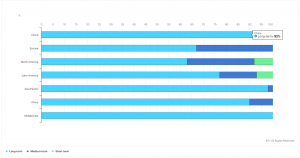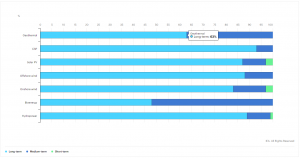






For utility-scale renewable electricity technologies, many countries are transitioning from support schemes based on administratively set tariffs to competitive auctions for long-term power purchase agreements (PPAs). If they are well designed, auctions create a beneficial situation for both governments and developers.
For many governments, competition results in price reductions throughout the supply chain and lower total subsidy costs for renewables. For developers, PPAs provide long-term revenue certainty, which reduces project risks for capital-intensive renewable technologies such as wind and solar photovoltaic (PV).
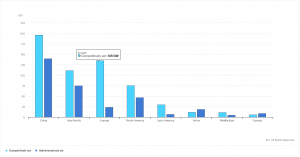
Renewables 2019 expects that remuneration for more than two-thirds of all new utility-scale renewable capacity over the next five years will be competitively set. This is significantly higher than the Renewables 2018 estimate of half of additions, mainly because the transition to competitive auctions for onshore wind and solar PV is happening more quickly than anticipated in China.
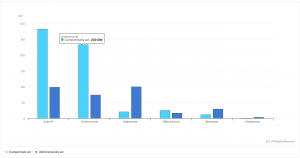
Competitively set remuneration therefore covers almost 75% of all wind and solar PV capacity to be commissioned during 2019?24. While the majority will be determined through government-organised auctions, a growing number of PPAs with large corporate buyers and utilities is also expected.
For hydropower, though, administratively set tariffs will continue to stimulate development, as vertically integrated utilities are usually responsible for developing large-scale hydro projects for which the technology has a much longer lifespan and offers a range of services that are not rewarded through an auctioning scheme.
Furthermore, most hydropower expansion is expected in emerging and developing economies, where vertically integrated utilities predominate. For most bioenergy capacity, remuneration will be set administratively, as China remains the largest growth market owing to its feed-in tariff (FIT) system.
Regional remuneration policy trends vary across markets. In the European Union, renewable capacity growth is driven mostly by competitive auctions after the European Commission’s proposal to phase out FITs.
In the United States, remuneration for wind and solar are usually set competitively through corporate or utility purchases, but projects also receive production and investment incentives (production tax credits [PTCs] and input tax credits [ITCs]) that are set administratively.
Except for large?scale hydropower, most Latin American countries have adopted auctions schemes for all renewable technologies. In Africa, countries are switching from FITs to competitive auctions, but hydropower still dominates capacity growth and its remuneration is mostly set administratively.
Long-term contracts covering more than 75% of the economic lifetime of renewable projects dominate the forecast. However, government policies have begun to expose wind and solar PV to more market and price risks, as these technologies have matured and become more competitive with fossil fuel-based alternatives.
Overall, wind and solar PV contracts are becoming shorter in most countries where electricity markets are partially or fully liberalised and competitive financing exists, such as North America and Europe. In these markets, some developers are switching to multiple revenue streams from corporate PPAs, auctions and merchant activities. Bioenergy-for-power contracts are usually shorter than those for other renewable technologies due to fuel cost variability.