



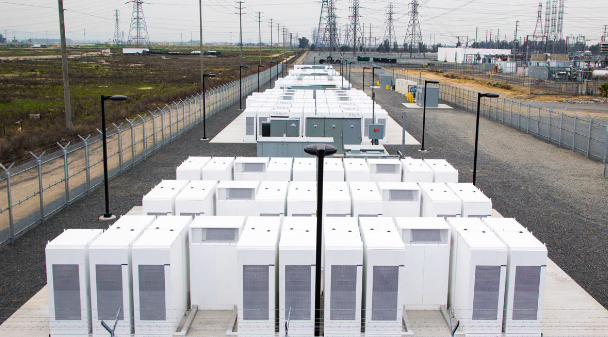
LF Energy has launched its Digital Substation Automation Systems initiative, in hopes of creating a more modular, flexible and resilient grid. It aims to make interoperable substations that are both hardware and software agnostic.In pursuit of creating an entirely new, modular, flexible and resilient power grid, LF Energy has launched its Digital Substation Automation Systems (DSAS) initiative. The scheme aims to make interoperable substations that are both hardware and software agnostic, through the use of standardized, open-source software.
“What a digital substation does is it de-aggregates hardware and software, so you can use commodity hardware in order to run software, which decreases cost.” LF Energy Executive Director Shuli Goodman told pv magazine. “Eventually, I think we’ll be able to abstract the hardware by creating software-defined hardware,” meaning that the hardware used in a substation won’t matter, because all hardware be compatible with the same, open-source, software, essentially creating plug-and-play substations.
The idea is to take generation assets like a PV system and think about their generation less from a control perspective and more from an orchestration perspective. It is this, as well as a reduced reliance on specific hardware and software for orchestration, that Goodman sees as being key to a modular power grid.
These substations form crossroads of the grids, connecting grid users and grid voltage levels. By deploying open-source technology, digital substations can more efficiently adjust to changes in power supply and demand through expanded dynamic protection settings, better data management capabilities and adaptive automation functions.
“I think of a digital substation as the edge node router of the future,” Goodman said. “You cannot network electrons, but what you can do is you can network metadata about electrons and about supply and demand, but you have to have something that [the data] runs through, with which you have the ability to push as much intelligence out to the edge. You can then give price signals out to enable a device on the edge (pv system, inverter, battery, etc.) to operate.”
CoMPAS
The first specific project under the DSAS initiative is Configuration Modules for Power industry Automation Systems, also known as CoMPAS. CoMPAS specifically seeks to build standardized and broadly applicable software components that optimize protection, automation and control systems, as deploying modern protection, automation and control technologies is a pivotal first step to update substations
CoMPAS’s software components will be developed according to IEC 61850, an open-source, international, standard that provides the framework to integrate a substation’s protection, automation and control functions, regardless of the vendor or end-user.
“CoMPAS is a configuration tool that allows a network operator to use an open-standard 61850 to configure a digital substation so that it can be inter-operable,” said Goodman. “As soo as you do that, we begin to start shifting the economics of what’s happening. We want to be able to do that, because the more solar that we bring on, we may end up coming up with a design model in which there are many more substations that are now starting to serve as edge node routers for being able to coordinate millions of devices.”
LF Energy and the pursuit of a modularized grid
Source:pv magazine USA

ViaTim Sylvia
- Advertisment -