





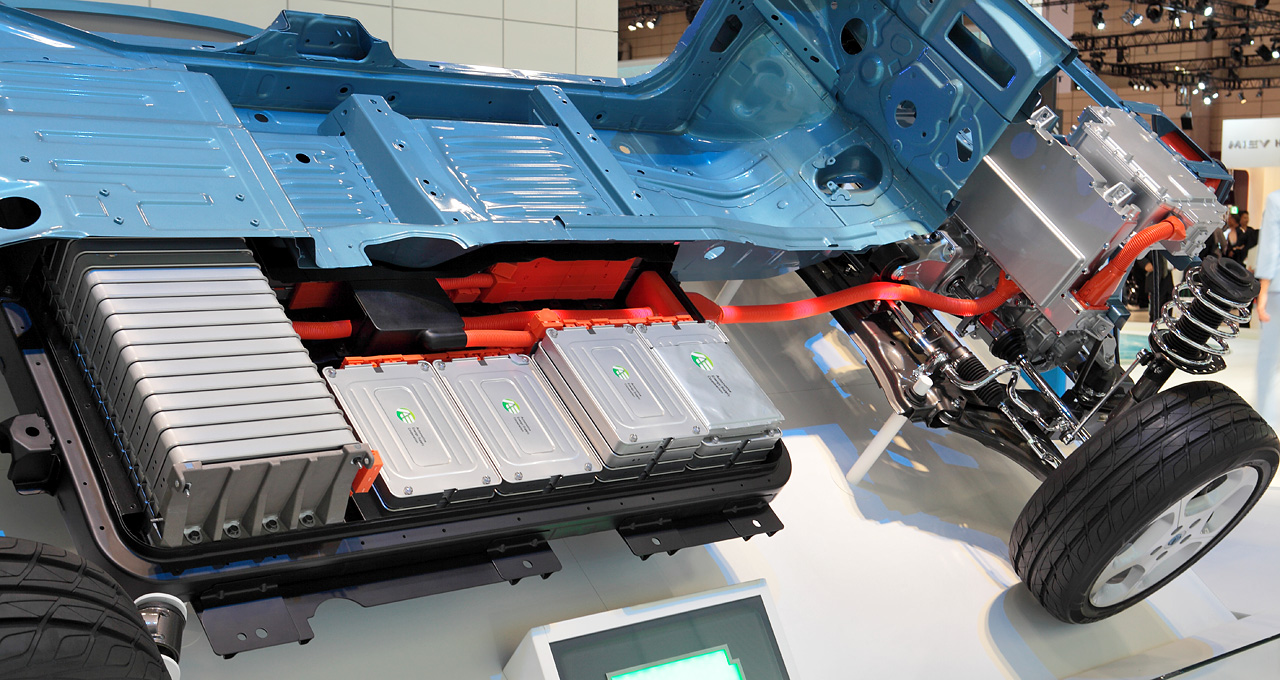
Used electric vehicle (EV) batteries can be repurposed to store electricity generated by large scale solar plants, according to an MIT study.
The U.S.-based researchers claimed even devices which have lost 80% of their original capacity could offer a better investment prospect for solar-plus-storage projects in California than purpose-built, utility scale batteries, not least because such ‘second life’ EV batteries could cost as little as 60% of their purchase price.
MIT research co-author Ian Mathews conceded technical hurdles remained to the deployment of used EV batteries on a large scale, such as aggregating batteries from different manufacturers and screening which devices could be reused. However, Mathews insisted used EV batteries still offered a persuasive enough business case to justify the cost of recovering them, screening performance and redeploying them.
Optimal operation
The researchers used a semi-empirical model – including some ‘pre-cooked’ calculations – to estimate battery degradation, and concluded operating such aggregated storage devices at 15-65% of full charge would extend their second life. “This finding challenges some earlier assumptions that running the batteries at maximum capacity initially would provide the most value,” the scientists stated.
Mathews said the feasibility of second-life EV battery storage would depend on the regulatory and rate-setting regimes under which they would operate. “For example, some local rules allow the cost of storage systems to be included in the overall cost of a new renewable energy supply, for rate-setting purposes, and others do not,” he said.
Algorithms
The academic added, longer-term pilot studies are needed to assess the potential of such systems.
The MIT researcher noted control algorithms may be adapted during projects to lengthen the feasible lifetime of such facilities. “We think this could be a great application for machine-learning methods,” said Mathews, “trying to figure out the kind of intelligent methods and predictive analytics that adjust those control policies over the life of the project.”
The successful reuse of electric vehicle batteries for grid scale storage would also require buy-in from EV manufacturers, energy storage businesses, solar project developers and power electronics specialists, added Mathews.
The MIT research project was backed by the European Union’s Horizon 2020 research program as well as the Quantum Sustainable Solar Technologies engineering research center funded by the U.S. Department of Energy and National Science Foundation, and the Singapore National Research Foundation, through the Singapore-MIT Alliance for Research and Technology.
Bern University of Applied Sciences, in Switzerland, is also investigating how used solar modules and EV batteries can be repurposed. That Horizon 2020 project runs until 2022.