




As the world realizes the importance of renewable energy (RE), governments and businesses from all over are making efforts to bring their RE portfolio to par or even more than their fossil fuel-based counterparts.
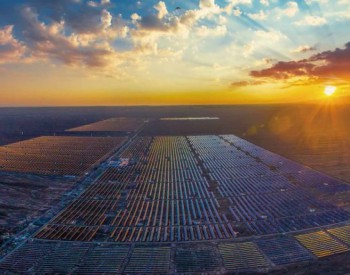
One such effort is the development of solar energy farms. In many parts of the world, the governments invite power developers to build solar projects at a dedicated place where the land, common facilities, grid connectivity and other permits are already taken care of. Many areas such as empty deserts, agricultural lands and rural lakefronts are transforming into huge solar power farms.

The Noor Abu Dhabi single-site solar plant—claimed to be the largest in the world with a production capacity of nearly 1.2 GW—has 3.2 million solar panels.
According to a recent analysis of data compiled by BloombergNEF, in 2019 around 35 projects of at least 200 MW were commissioned all over the world, which is a 17% increase on y-o-y basis.
In addition, there have been immense technological advancements in the solar industry over the last 10 years, in areas including but not limited to PV system designing, battery storage, panels, structures and more. These all help in increasing the overall efficiency of a plant. The latest of these advancements are the Bifacial Solar modules which generate power from both sides of the panel compared to traditional single-sided solar panels, thus increasing the overall capacity of a plant, its panel efficiency, and reducing its BOS costs.
Furthermore, equipment costs seem to be lowering day by day. BNEF says that the cost of solar panels in particular has fallen about 88% in the last 10 years and is likely to drop by another 43% by 2030.
The bigger sizes of solar power plants bring better economies of scale for developers and also ensure availability of continuous renewable power at lower tariffs. According to Chris Archer, head of Green Energy Americas at Macquarie Capital, solar power developers are more confident in building large plants “because they can deliver for a lower cost of energy,” highlighting the main reason to be “simple economics.”
The costs for transmission lines, substation design, security, land, and fences are comparable between large and small projects, making it an easy choice for developers to build huge solar power farms to generate low-cost energy.
Realizing the above factors, many countries of the world are quickly joining the race of building mega solar power plants.

Egypt’s 1.5 GW Benban solar park is one of the largest in the world and can alone generate electricity for more than a million homes.