





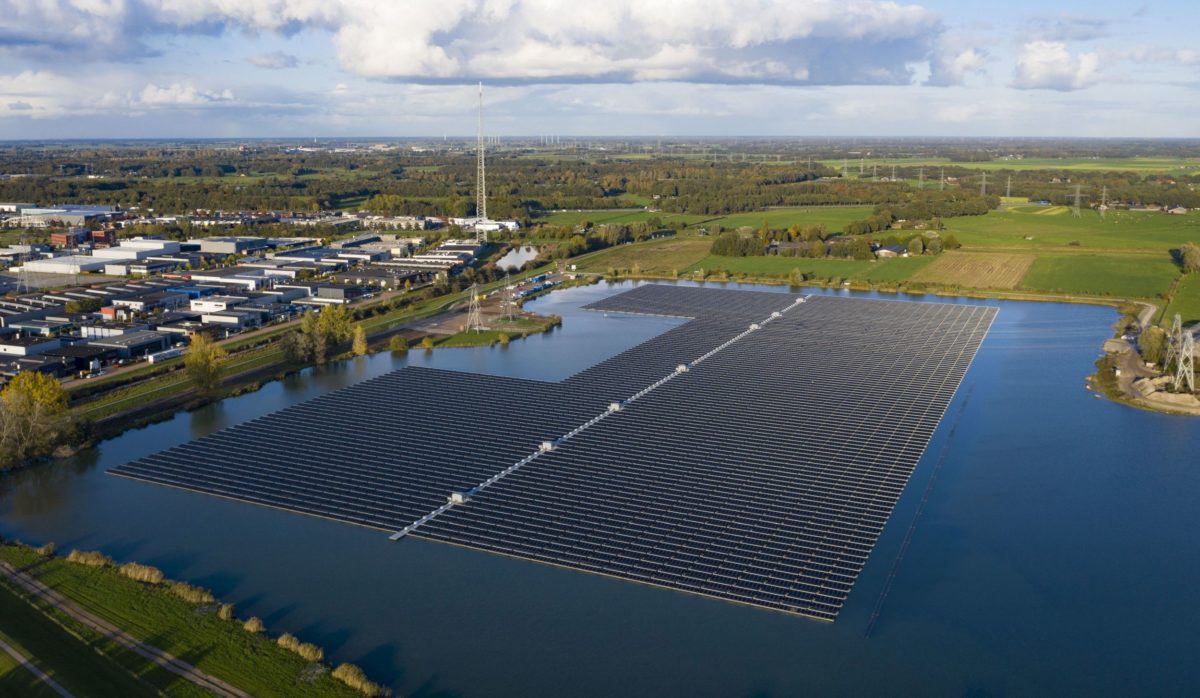
Norway-based consultancy DNV GL has created a new consortium aimed at defining standards and recommended practices for the floating PV business.
The Floating Solar joint industry project (JIP) consortium comprises big European energy companies such as Portugal’s EDP, France’s EDF and Norway’s Equinor, as well as German project developer BayWa r.e, Engie unit Compagnie Nationale du Rhône, UK-based independent power producer Mainstream Renewable Power and Norwegian solar developer Scatec Solar, among others. It also includes French floating PV specialist Ciel & Terre and Sweden’s mooring and anchoring system provider Seaflex.
The project will be related to floating solar projects both inland and on coastal waters and will mainly focus on site conditions assessment, energy yield forecasting, mooring and anchoring systems, floating structures, permitting and environmental impacts. “By not limiting itself to any specific floating solar technology, the consortium aims to define requirements and guidelines that can be applied in a practical manner to all floating solar projects,” DNV GL explained.
A draft document with the first recommendations should be developed by the end of this year, while a final version with verified practices should be published in the first quarter of 2021.
This is not the first attempt of defining best practice for the floating PV segment. In November, the Solar Energy Research Institute of Singapore (SERIS) published the Floating Solar Handbook for Practitioners, a practical guide for developers of inland and near-shore floating PV projects. This guide is intended to help developers with site identification; feasibility studies; finance; environmental and social issues; procurement and construction; and operations and maintenance.
A few months earlier, the Dutch Foundation for Applied Water Research – STOWA – had also published guidelines and tools for floating PV plant developers. This guide provides recommendations for securing permits from water authorities, describes conditions under which it is permissible to place solar panels on water, and outlines the possible effects of floating solar on water ecosystems.