




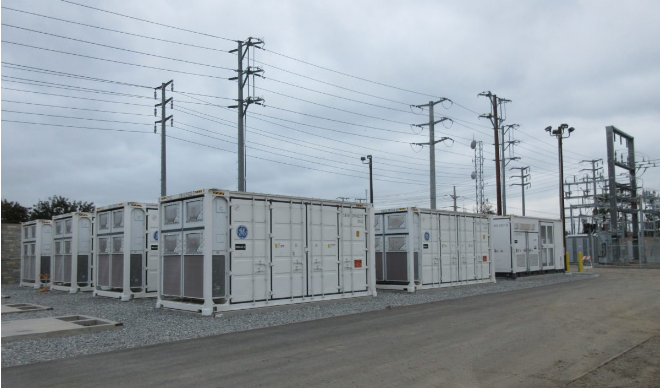
Calpine and GE Renewable Energy completed the Santa Ana Storage Project in southern California.
The project contains a 20MW/80MWh (4 hour) standalone battery energy storage system using GE’s Reservoir energy storage technology. The system is supported by a 20-year Resource Adequacy Power Purchase Agreement (PPA).
This grid-connected battery energy storage system represents a step forward in Calpine’s plans to expand its energy storage footprint. The California facility itself will be able to be expanded in future phases.
In late June, Arevon Asset Management opened the 100 MW / 400 MWh Saticoy battery energy storage system in Ventura County, northwest of Los Angeles.
The system was acquired by Arevon, a unit of global asset management firm Capital Dynamics, in May, together with infrastructure developer S&B USA Energy. Capital Dynamics owns 51% of the project and S&B USA the remaining 49%.
Electricity from the site is supplied to Southern California Edison under the terms of a 20-year purchase and sale agreement. The project was developed by Strata Clean Energy.
The system uses 142 Megapacks, Tesla’s utility-scale battery storage product. It also will use a battery storage performance management platform from Power Factors. The decision to build the Saticoy battery came after local residents and community leaders helped stop plans for a proposed gas peaker plant. Arevon completed the project in nine months. Energy stored on the site can power the city of Oxnard for four hours or all of Ventura County for 30 minutes.
More storage on its way
Those project are among the 2,000 MW of energy storage capacity that is expected to enter service in California by August 1. Much of this capacity will have four hours of battery energy sitting behind it, nearly 8,000 MWh in total.
That storage capacity is already being felt on the state’s grid. In the early evening on July 9, California’s main grid noted that energy storage injected 999 MW of power during a “flex event” where rolling blackouts might otherwise have occurred.
Two of the world’s largest lithium ion batteries contributed to these capacity values, and backed up the grid during the flex event.
The first is LS Power’s 230MW lithium ion energy storage facility, which was scheduled to increase from 230 MWh to 690 MWh by this summer, and add more capacity at a later date. This plant is, for a moment anyway, one of the world’s largest lithium ion grid-connected batteries.
The second facility is Moss Landing’s 300 MW / 1,200 MWh facility, which joined the grid in December 2020. This facility might soon expand to 1.5 GW / 6 GWh.