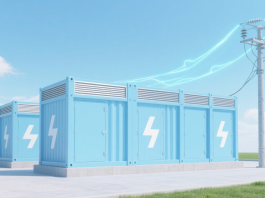
The US energy storage industry deployed a record 20.2 GWh of battery energy storage systems (BESS) in the second quarter of 2026, a 108% increase from the previous three-month period.
The record quarterly deployment brought installations in the first half of 2026 to 30.8 GWh, says the US Energy Storage Market Outlook Q3 2026 (ESMO) released today by the Solar Energy Industries Association (SEIA) and Benchmark Mineral Intelligence.
Utility-scale projects accounted for the vast majority of Q2 additions, amounting to 17.9 GWh, while commercial and industrial (C&I) systems added 1.8 GWh and residential storage contributed 657 MWh.
Utility-scale storage capacity in the US has nearly doubled over the first 18 months of the Trump administration, rising to 165 GWh from 88 GWh. More than 74% of the Q2 installations took place in states won by President Donald Trump in 2024, led largely by Arizona, Texas and Utah.
Arizona alone recorded the largest quarterly deployment by any state, adding more than 6.2 GWh of utility-scale storage. Texas and California followed with 3.8 GWh and 3.6 GWh, respectively.
The strong deployment has prompted SEIA and Benchmark to raise their forecast for cumulative US energy storage installations through 2030 by 11.5% to 683 GWh. Annual installations are expected to exceed 110 GWh.
The US also expanded its domestic battery manufacturing capacity during the quarter, with two new cell plants opening in Ohio and Tennessee and a 50-GWh battery module facility in Texas. Total domestic cell manufacturing capacity surpassed 50 GWh, while module manufacturing capacity exceeded 100 GWh.

Welcome!Log into your account