





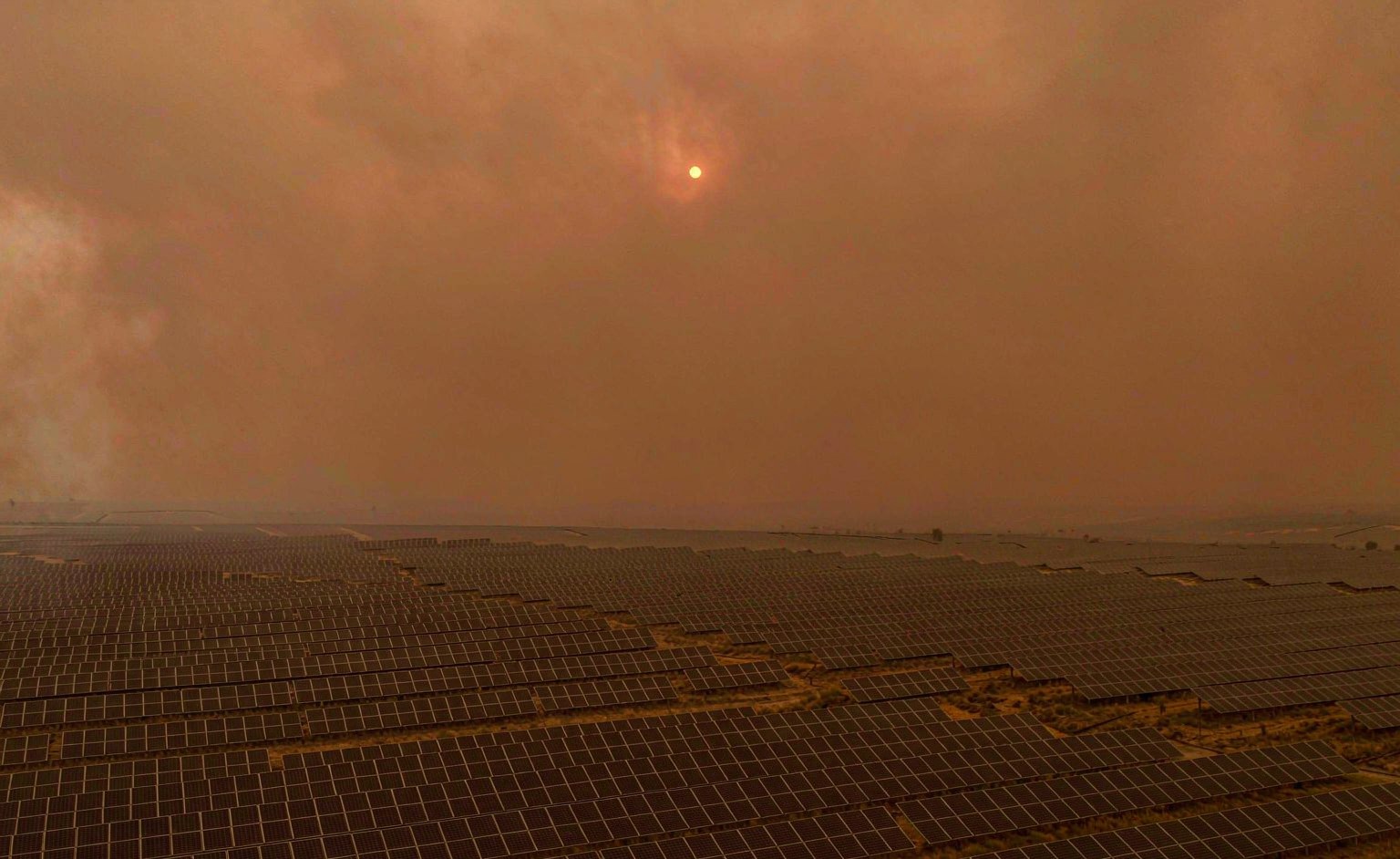
Smoke from major bushfires can cut solar generation by up to 70% at plants within about 50 kilometres of fire hotspots, and still by around 30% at farms as far as 150 kilometres away, according to researchers at UNSW Sydney.
The study, from the School of Photovoltaic and Renewable Energy Engineering and published in Solar Energy, modelled how smoke and airborne particles affected output and module temperatures across southeastern Australia during the 2019-2020 Black Summer and Victoria’s 2009 Black Saturday fires. The older event produced smaller estimated losses, about 18% near hotspots and up to 10% further out. The figures are modelled estimates rather than single-farm measurements, and deliberate curtailment could not be separated out.
Dr Shukla Poddar, a postdoctoral researcher, said wind carried smoke deep into New South Wales, so operators should look well beyond the farms nearest the fire line.
The team recommends combining bushfire data, wind patterns and smoke-trajectory modelling into warning systems, so operators can plan inspections, schedule cleaning or adjust panel angles before smoke arrives. It also advises more frequent thermal inspections to catch hot spots caused by uneven soot, plus vegetation management and firebreaks inside plants.